

.webp)
Atomic-6 has launched ODC.space, a marketplace for orbital data centre capacity aimed at AI developers, software providers and government agencies.
Customers can use the service to specify, price and order capacity in orbital data centres without building their own satellite programmes. Atomic-6 expects delivery in two to three years for sovereign or colocated capacity, compared with terrestrial data centre projects that can take more than five years.
The launch comes as demand for computing infrastructure rises and new ground-based data centre projects face constraints around land, electricity supply and permitting. Atomic-6 is positioning orbital systems as an alternative for organisations seeking additional computing capacity but limited in their ability to expand on Earth.
ODC.space is structured as a marketplace rather than a bespoke spacecraft procurement process. The service covers spacecraft integration, launch arrangements, mission operations, regulatory filings and operational support, with contracts based on power and bandwidth.
A baseline system is designed around 1U compute nodes and satellites in the 100kW class, operating in low-Earth sun-synchronous orbit. Communications capacity starts at 1 Gbps, and support includes 24/7 mission control for five years, with an option to extend to seven.
How it works
Atomic-6 sources spacecraft construction, launch services and operations through a domestic partner network. Customer-furnished processing units are integrated into the spacecraft, while the company handles licensing and other operational requirements needed to place computing infrastructure into orbit.
The regulatory work includes spectrum coordination and approvals involving the FCC, NOAA and FAA. By taking on those tasks, Atomic-6 is seeking to remove a barrier for customers without an existing space programme.
Col. Chris Hadfield, a member of Atomic-6's Board of Advisors, described the service as a simplified contracting model for space-based computing infrastructure.
"What customers get is a single path from requirements to on-orbit operations," said Chris Hadfield, Board of Advisors Member, Atomic-6. "You don't need to stand up a satellite program to deploy compute capacity in space. You contract capacity, Atomic-6 delivers and operates the system, and the front end looks like a data center, not a spacecraft."
Atomic-6 argues that orbital data centres could appeal where security, deployment speed and global reach matter more than keeping workloads on the ground. It also says these systems are physically isolated and may be better suited to workloads where data is already in orbit.
Technical systems
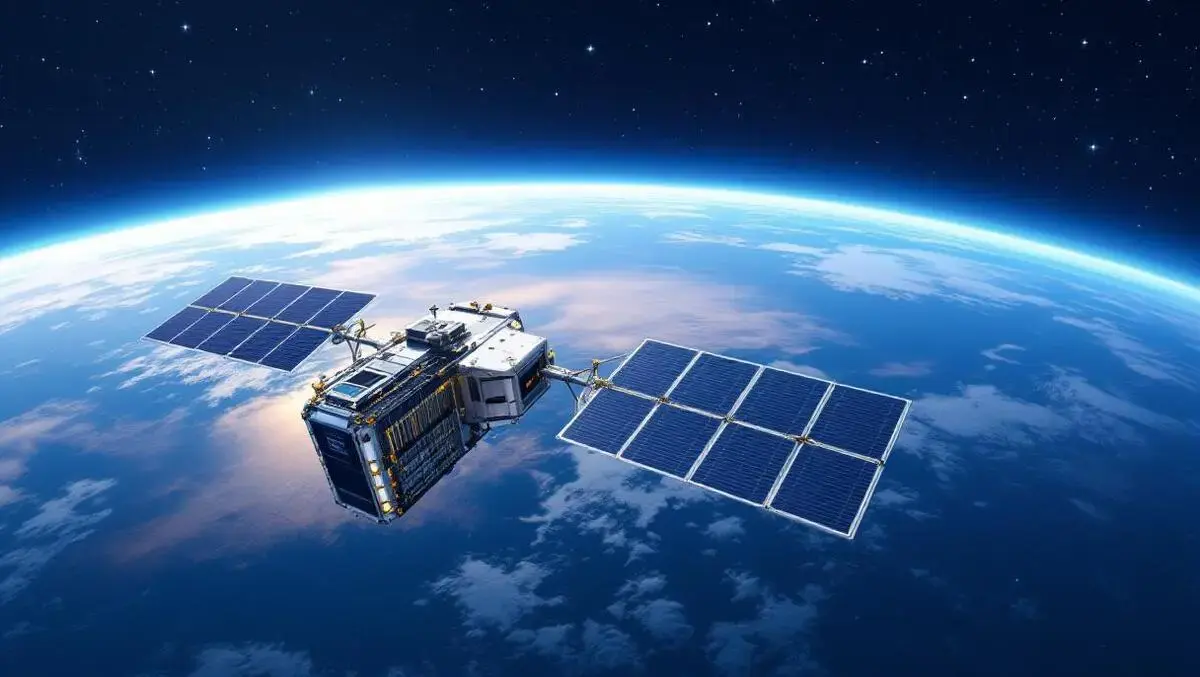
The platform is built around three in-house technologies intended to address power generation, heat management and survivability in orbit: Light Wing solar arrays, Hot Wing thermal radiator systems and Space Armour shielding against micrometeoroids and orbital debris.
Those constraints have long limited the scale of computing systems in space. Atomic-6 says its combination of power, thermal control and shielding is intended to make orbital data centres easier to procure as infrastructure rather than as one-off spacecraft projects.
Trevor Smith, Founder and Chief eExecutive of Atomic-6, said the company wants customers to focus on contracts and timelines rather than technical speculation.
"The promise here is not hype," said Trevor Smith, Founder and Chief Executive Officer, Atomic-6. "We provide systems engineering to make an easy, turnkey solution with no-nonsense pricing to answer customer questions about what's possible and on what timelines. This represents a maturation of the ODC market, where users are more interested in contracts than projections."
Hadfield also argued that space-based infrastructure is not subject to the same development bottlenecks as terrestrial projects, particularly where utilities and permitting slow deployment.
"On the ground, AI infrastructure is increasingly gated by 'big iron' bottlenecks: transformers, turbines, transmission upgrades, and permitting," said Hadfield. "Space systems operate under a different regulatory regime, with more predictable licensing pathways and fewer public-facing constraints."
Atomic-6 is targeting organisations making long-term investments in AI and data infrastructure that are constrained by space, electricity or deployment timelines on Earth rather than by access to capital. It identified AI workloads, national security space missions and other compute-heavy tasks as initial use cases.
The company develops deployable structures, power systems and protective technologies for spacecraft. With ODC.space, it is seeking to turn those underlying systems into a commercial route for renting or owning computing capacity in orbit.