

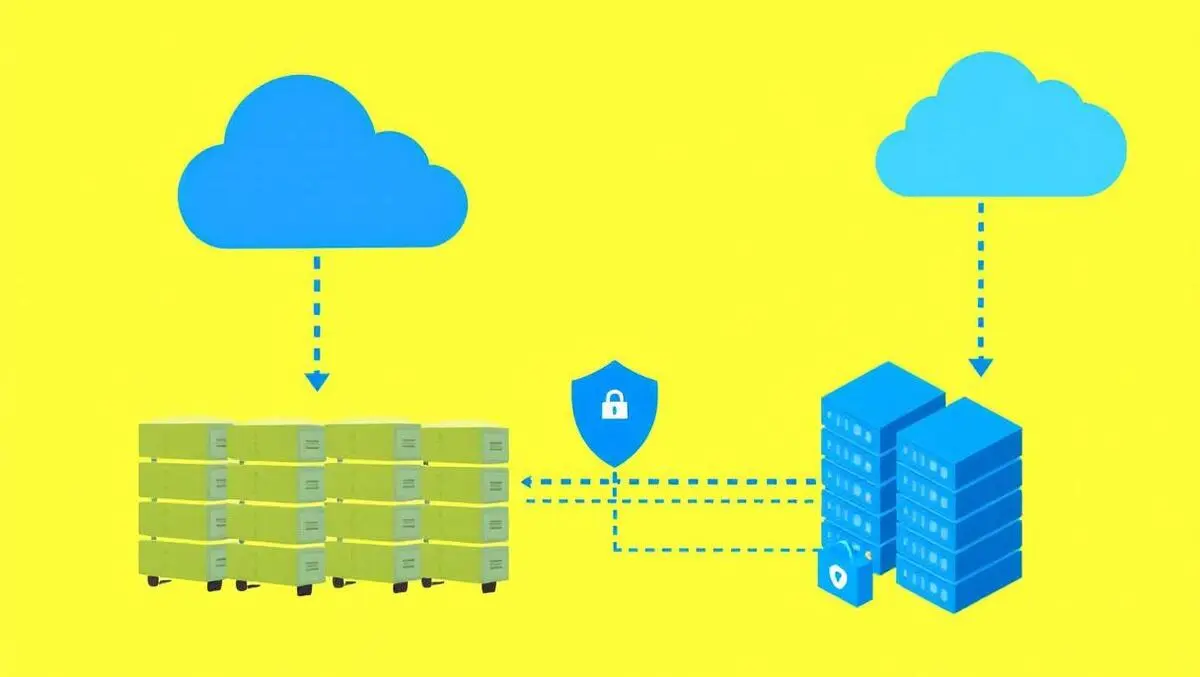
CloudCasa expands backup & disaster recovery for Kubernetes
Tue, 7th Oct 2025
CloudCasa has announced the latest release of its CloudCasa software, focusing on expanded storage options, improved file recovery for virtual machines, and enhanced disaster recovery workflows for Kubernetes and VM environments.
New capabilities
The updated CloudCasa software introduces a range of new features designed to offer users more flexibility and control over data protection strategies, spanning cloud, on-premises, and hybrid deployments.
Among the principal enhancements, CloudCasa now enables backup to NFS (Network File System) storage in addition to its existing support for object storage. This extension aims to serve users operating in on-premises and edge environments with greater flexibility when selecting their backup storage targets.
The software also offers a new file browsing and download feature for VM backups. With this functionality, users can browse individual virtual machine disks and file systems, and download specific files as needed. This targeted approach to file-level recovery enables users to retrieve individual files without needing to restore an entire virtual machine, potentially saving significant time and resources in recovery scenarios.
Enhanced disaster recovery
CloudCasa is introducing CloudCasa DR (CDR) for Storage for Longhorn Volumes, providing a streamlined disaster recovery restore option for Kubernetes environments using Longhorn. DR volumes can be configured for continuous data replication between clusters, simplifying and accelerating recovery processes during failover events.
Broader support and flexibility
The introduction of backup to NFS storage provides organisations with additional options to support evolving infrastructure requirements, particularly in environments where object storage may not be feasible or where edge computing challenges exist. NFS storage remains a common standard in many data centres and branch operations, and adding this capability could shorten backup windows and facilitate more robust disaster recovery planning for a segment of CloudCasa's user base.
The file browsing and download capability for VM backups aims to address common pain points associated with traditional full-VM recoveries, allowing IT administrators and operations teams to respond to restore requests without unnecessary downtime or overhead quickly. This feature is designed to support scenarios in which only a subset of data is needed rapidly, rather than a full machine image.
Focus on Kubernetes environments
The enhancements to disaster recovery, particularly the integration with Longhorn volumes, are designed to simplify operations for organisations running Kubernetes clusters that require data replication and business continuity assurances across multiple sites or cloud providers. CDR for Longhorn stores replicates copies of persistent volumes, reducing manual steps in failover situations and aiming to ensure faster service resumption.
CloudCasa's ongoing strategy appears to align with the needs of enterprises seeking to consolidate data protection and disaster recovery under a unified platform that works across both containerised and virtual machine workloads. By continuously advancing its capabilities in backup and recovery operations, CloudCasa is targeting IT teams responsible for complex, mixed-infrastructure deployments.
"These new capabilities further our mission to make data protection and disaster recovery for Kubernetes and Kubernetes-native VMs as easy and efficient as possible," said Bob Adair, Head of Product Management at CloudCasa. "From giving customers more storage options to accelerating file-level recovery and enhancing disaster recovery workflows, this release is all about removing complexity and improving recovery times."
CloudCasa now provides users with storage, file-level restoration, and disaster recovery options that are designed for resilience, flexibility, and efficiency as the demand for Kubernetes and VM protection evolves in complex IT environments.