

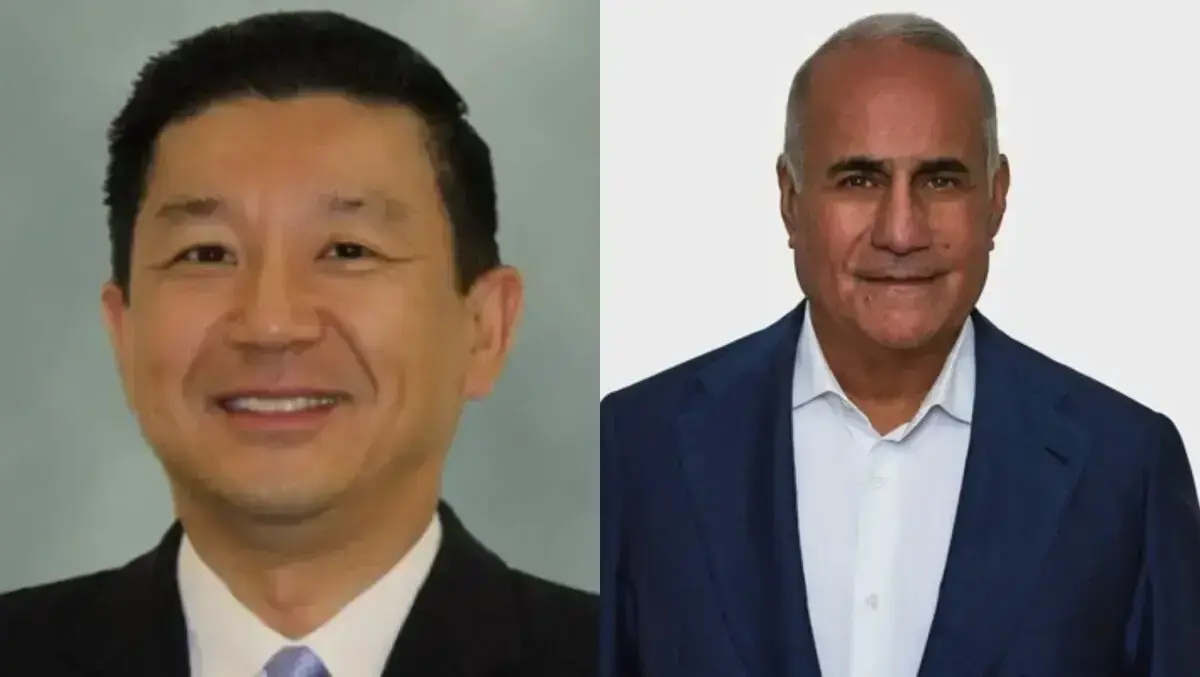
Delta & X LABS sign AI data centre power partnership
Wed, 15th Jul 2026
Delta Electronics and X LABS have signed a technology partnership memorandum to supply energy-as-a-service for AI data centre projects, including plans for 100MW of Delta solid-state transformer technology.
The arrangement is intended to address rising power constraints in AI data centre development, where growing rack densities and larger compute clusters are increasing demand for reliable electricity delivery from grid connection to server equipment.
Under the memorandum, the companies plan to work together on product supply and energy-as-a-service for AI data centre projects. The initial 100MW target could later expand to gigawatt-scale capacity.
X LABS develops islanded grid projects for AI data centres and large industrial users, while Delta brings power infrastructure technology to the partnership. The tie-up combines Delta's equipment and engineering with X LABS' investment management, financial structuring, and site development.
At the centre of the agreement is Delta's solid-state transformer technology. These systems replace conventional passive transformers with digitally controlled power electronics, allowing faster grid response, real-time voltage regulation, and more flexible electricity delivery.
This approach targets a growing problem for data centre operators and developers as artificial intelligence workloads expand. In this market, the constraint is shifting from access to computing hardware to access to electricity and the infrastructure needed to move it efficiently through a facility.
Power constraint
The partnership highlights the strain AI is placing on existing energy systems. Higher-density racks and larger training and inference clusters require more power at a time when utilities, developers, and operators are already facing long grid-connection timelines and pressure on transmission networks.
Delta said its solid-state transformer design sits at the AC/DC, medium-to-low-voltage interface. Its 800VDC architecture is intended to improve the path from grid supply to equipment loads inside AI data centres.
Delta's existing microgrid projects in the United States have produced operating data on how solid-state transformer-based systems perform under live and variable grid conditions. The companies expect to apply that experience to X LABS' energy park designs as the partnership moves towards deployment.
Mark Ko, Vice Chairman of Delta Electronics, said the agreement reflects a shared focus on infrastructure at a time of rapid AI expansion.
"X LABS is the kind of partner Delta looks for - ambitious, technically driven, and building at a scale that matches the moment. This MOU reflects the trust we've built together and our shared commitment to solving one of the most important infrastructure challenges of this decade," said Ko.
X LABS described the deal as a way to combine technical design with project finance for dedicated power systems.
"Off-takers and investors alike recognize the technological complexity of this electrification platform. We're excited to integrate Delta's capabilities, allowing us to finance and deliver industry-leading energy parks for AI data centers and large-scale industrial users," said Karan Trehan, Chief Executive Officer and Founder of X LABS.
Frank Duggan, Chairman of X LABS and Vice Chairman of Hitachi Energy, pointed to the challenge of spanning multiple voltage layers within islanded grid systems.
"The challenge for an islanded grid is that no single OEM encompasses high, medium, and low voltage. Delta's SST technology, which sits at the AC/DC, medium-to-low-voltage interface, together with its 800VDC architecture, provides a grid-to-rack capability that is otherwise difficult to achieve," said Duggan.
Industry demand
The agreement comes as energy supply has become a central issue in the economics and delivery schedule of AI infrastructure. Developers are seeking ways to secure electricity outside conventional utility timelines, including on-site generation, private substations, microgrids, and dedicated energy parks.
For X LABS, the arrangement adds a transformer and power-conversion element to its islanded grid model. For Delta, it extends the use of solid-state transformers into a part of the data centre market where operators are seeking alternatives to conventional electrical designs.
William Mao, Vice President of Energy Infrastructure at Delta Electronics Americas, said the company sees electricity systems as a defining part of AI expansion.
"Delta has long believed that energy infrastructure is the foundation upon which the AI era will be built. This partnership with X LABS is a meaningful step in our mission to deliver that foundation at scale, and we are pleased to formalize our collaboration today," said Mao.
"As AI data centers increase in power density, Delta's SST technology and power buffering solutions enable more efficient grid-to-chip power conversion and improved system-level flexibility, supporting the scalable, high-performance infrastructure required for AI workloads," he added.