

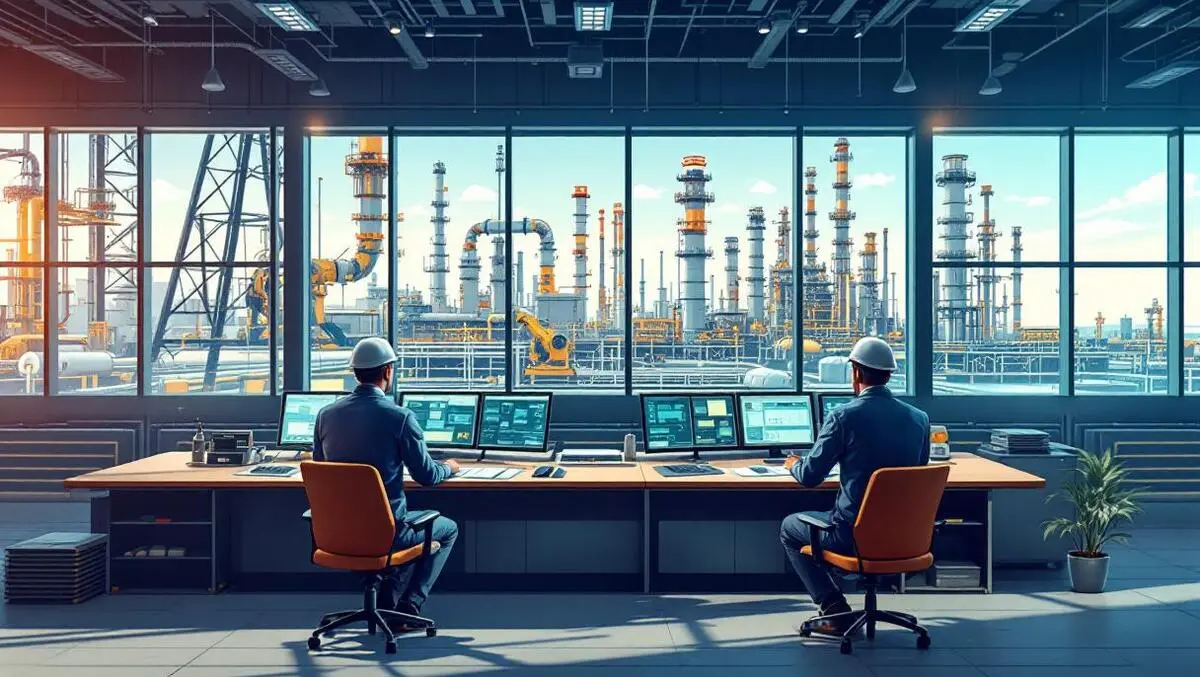
Energy & chemicals sector ramps up autonomy by 2030
Mon, 23rd Mar 2026
Schneider Electric has published research indicating that energy and chemicals companies are increasing investment in autonomous operations through 2030, with automation becoming more widespread across the sector.
The survey of 400 senior executives in 12 countries found that nearly a third of operations are already fully autonomous. On average, respondents said their organisations are operating at 70% autonomy and expect that figure to reach 80% by 2030.
About 31.5% of executives said advancing autonomy would be a critical priority over the next five years, rising to 44% over 10 years. Fewer than 5% described it as a low priority.
The findings suggest companies are responding to a mix of cost pressures, labour shortages and rising electricity demand. Among respondents, 59% said delaying adoption would increase operating costs, while 52% cited worsening talent shortages and 48% pointed to a loss of competitiveness.
AI emerged as the main driver of the shift. Nearly half of executives, 49%, identified it as the single biggest enabler of faster autonomous adoption, ahead of cybersecurity improvements, cloud and edge computing, digital twins, advanced process control and open software-defined automation.
This pressure is tied to expectations of much higher power demand from cloud computing and data centres. Electricity demand is projected to rise to almost 1,000 TWh by 2030, increasing the need for more flexible and efficient industrial operations.
Regional split
The data also showed clear regional differences. GCC countries and Asia were seen as the most advanced in current adoption, while North America is expected to record the fastest growth over the next five years.
The report linked North America's expected acceleration to its large base of energy production and consumption, along with expanding data-centre infrastructure. Europe was described as making steady progress, but following the slowest adoption path among the regions studied.
Executives also identified the main barriers to wider adoption. High upfront costs were cited by 34% of respondents, followed by legacy systems at 30%, organisational resistance at 27%, cybersecurity concerns at 26% and regulatory uncertainty at 25%.
Those figures point to a sector trying to modernise while still dealing with ageing industrial infrastructure. Many operators in oil, gas, power and chemicals continue to run complex plants built around older control systems, making upgrades costly and difficult to carry out without disrupting output.
Schneider Electric presented the trend as part of a broader shift in industrial operations, with electrification, automation and digital systems becoming more closely linked. In its view, that combination is moving autonomous operating models from a longer-term ambition to a more immediate business priority.
"Globally, organizations already report operating at 70% autonomy, with plans to hit 80% by 2030," said Gwenaelle Avice Huet, Executive Vice President, Schneider Electric. "Autonomy is rapidly becoming the new operating model of industry. As AI advances and energy systems come under growing pressure, autonomous operations are proving essential for resilience and competitiveness. And this shift isn't about replacing people, it's about empowering them to focus on higher value work, strengthening safety, and elevating skills. Those who scale now will shape the next era of industrial performance."
An external contributor to the research said the sector appeared to be further ahead than widely assumed.
"The report finds the adoption of autonomy in the sector to be more advanced than expected, with open, software-defined automation essentially leading the next phase of energy innovation," said Gaurav Sharma. "In a sector where reliability, safety, and carbon reduction are now non-negotiable, these technologies are emerging as the most effective way for operators to deliver 'more with less' and run more resilient and competitive operations."
Live projects
Schneider Electric also highlighted current projects that it said show how autonomous operating methods are being introduced in practice. These include work at Shell's Scotford Refinery in Canada, where it is helping to modernise operations using open software-defined automation.
Another example is European Energy's Kassø Power-to-X facility, which it described as the first commercially viable e-methanol plant. Schneider Electric said it is working with AVEVA at the site on AI-supported operations and remote monitoring.
Devan Pillay, president of Schneider Electric's heavy industries segment, said: "Autonomous operations are redefining how energy and chemicals companies run their entire facilities, and Schneider Electric and AVEVA are at the forefront of that shift, supporting customers such as Shell, European Energy, ADNOC and Baosteel on real-world deployments. By integrating Schneider Electric's process control and power management with AVEVA's digital technologies and industrial intelligence, we deliver integrated software-defined architectures that provide real-time visibility and enable AI-driven digital twins that can predict, adapt and self-optimize with minimal intervention."