

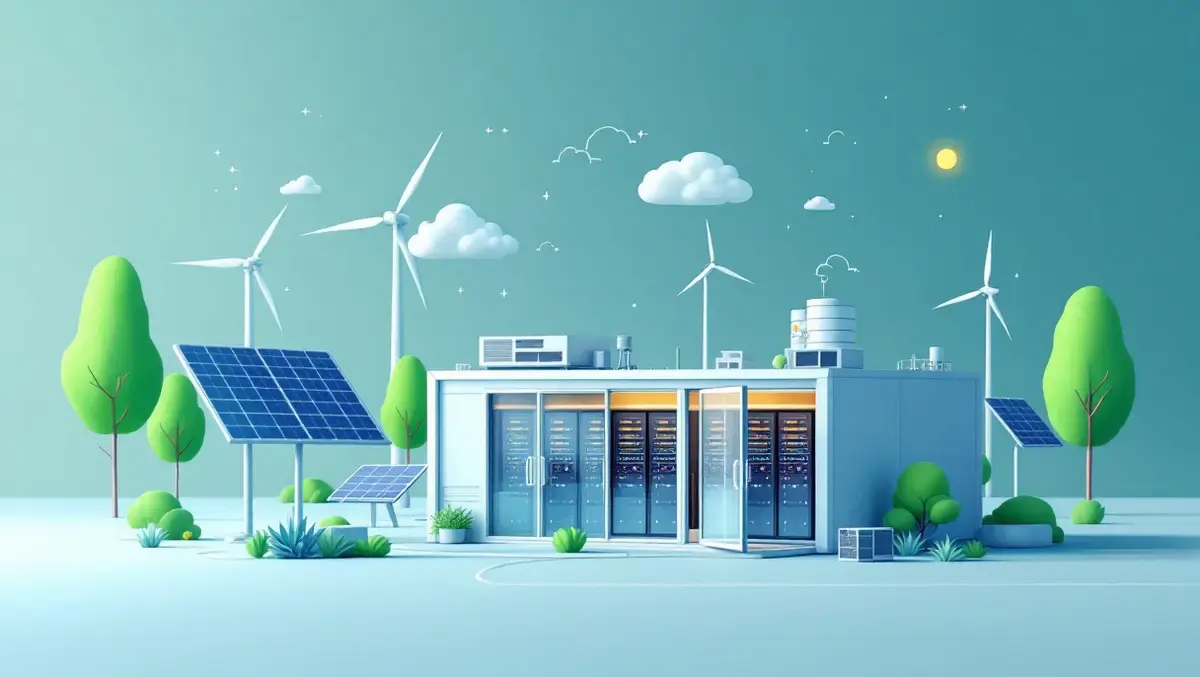
Green data centre market to hit USD $197.02bn by 2031
Thu, 5th Nov 2026 (Today)
The global green data centre market will reach USD $197.02 billion by 2031, up from USD $60.77 billion in 2026, according to MarketsandMarkets.
That would represent a compound annual growth rate of 26.5% as operators and enterprise customers seek lower-emission infrastructure for expanding digital workloads. Demand is being shaped by efforts to cut power use and carbon output while supporting AI, cloud computing and data analytics.
Green data centres are taking a larger role in infrastructure planning as operators pursue more efficient cooling, better energy management and wider use of renewable power. The shift also reflects greater scrutiny of environmental performance and the need for stronger reporting on emissions and energy use.
Cloud and hyperscale facilities are driving much of that change. These sites are under pressure to handle larger computing loads while limiting energy consumption, increasing demand for alternative backup power, efficient equipment and designs that can scale without sharply raising electricity use.
Market drivers
A key factor in the market's growth is the rise of high-density computing. As AI systems, cloud platforms and large-scale analytics require more processing power, operators are investing in infrastructure designed to reduce waste in power delivery and cooling.
The report also identifies automated monitoring and carbon reporting as a growing part of data centre operations. Operators want clearer visibility over power usage, temperature, airflow and emissions to meet internal sustainability targets and respond to regulatory requirements.
That trend is raising the profile of software tools such as Data Centre Infrastructure Management, or DCIM. The segment is expected to account for a significant share of the market because it combines monitoring of IT and facilities with tools for optimisation, capacity planning and incident management.
DCIM platforms track power usage, voltage, humidity and temperature across facilities. They can also help identify hotspots, detect faults and reduce over-provisioning by improving forecasts for space, cooling and electricity demand.
These systems are also being used to manage asset lifecycles from procurement to retirement. That gives operators more control over utilisation and can reduce unnecessary hardware replacement or duplication across sites.
Partnership activity
Recent partnerships show where investment is moving. In Europe, Schneider Electric and Vertiv worked with Google and Microsoft on a request for information aimed at finding alternatives to diesel backup generators, reflecting a wider push to cut emissions from resilience systems long reliant on fossil fuels.
Elsewhere, Huawei partnered with Qinghai Big Data Industry Development to develop a data centre in Qinghai's Hainan Prefecture designed to run on 100% clean energy. The project points to growing interest in modular facilities that combine lower-emission electricity sources with large-scale computing needs.
In another example, Schneider Electric partnered with NTT DATA to deploy its EcoStruxure IT DCIM platform across multiple European data centres. The rollout underlines the role software is playing in energy management as operators seek better oversight of facility performance.
Regional picture
North America currently leads the green data centre market, according to the research, supported by a relatively mature data centre industry, stronger integration of renewable energy and broad enterprise demand for more efficient infrastructure. The region is also facing greater pressure from sustainability rules and corporate decarbonisation targets, shaping purchasing decisions.
That combination has helped shift operators away from older, power-intensive facilities towards designs that place greater emphasis on modularity, efficiency and lower emissions. Industries including hyperscale cloud, financial services, healthcare and AI-led analytics are among those contributing to demand.
Asia Pacific is the fastest-growing regional market. Expansion there is being driven by digitalisation, AI adoption, denser computing deployments and government policies aimed at supporting lower-carbon and net-zero data centre development.
The outlook suggests the next phase of growth will depend on how effectively operators combine scale with lower energy consumption. It also points to vendors offering monitoring, automation, cooling and renewable integration tools remaining closely tied to how the sector adapts to rising computational demand and tighter environmental expectations.