

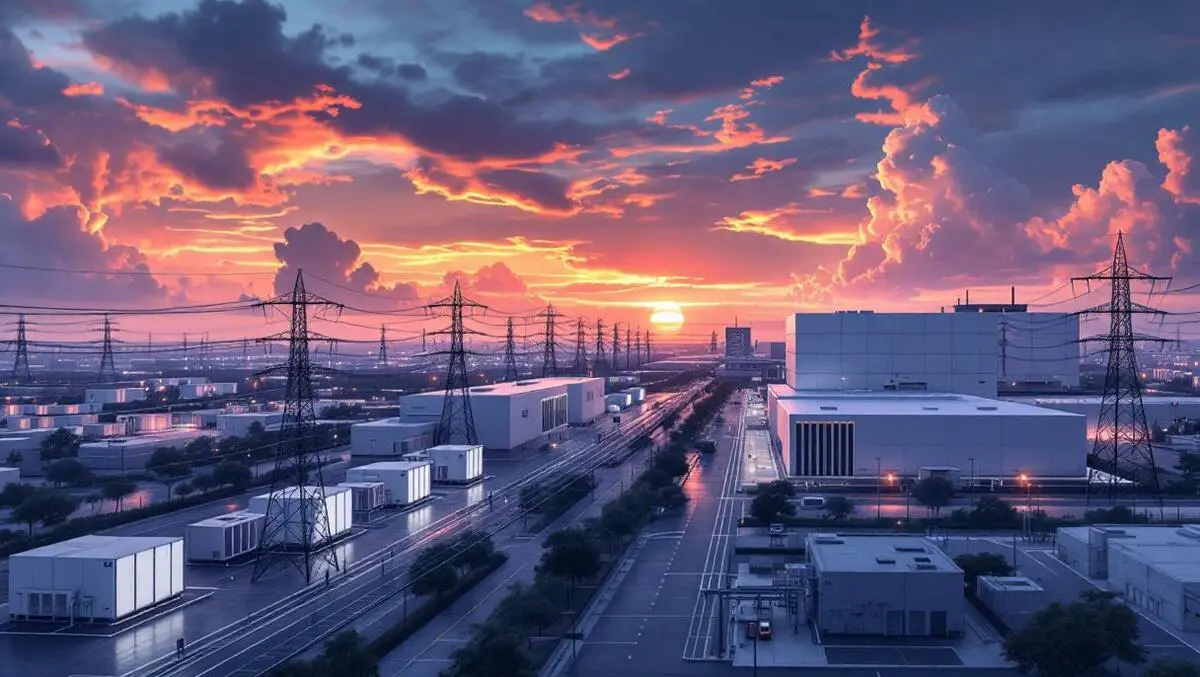
Skeleton opens Houston hub to power US AI data centres
Thu, 5th Feb 2026
Skeleton Technologies is opening an engineering centre in Houston, Texas, as the European power systems supplier expands further into the US market for AI data centre infrastructure.
The move reflects rising electricity demand from data centres and the operational challenges created by AI workloads. AI facilities can draw power in bursts, increasing volatility for operators and grid infrastructure.
Houston site
The Houston facility puts Skeleton closer to energy and industrial customers, as well as Texas' growing ecosystem of data centre developers and equipment suppliers. The company did not disclose headcount, investment figures, or an opening date.
US power grids have become a central issue in the build-out of AI compute capacity. Forecasts for US data centre electricity use commonly project sharp growth through the end of the decade, driven by AI training and inference, denser racks, and higher cooling requirements. Grid planners and utilities have warned that new connections can take years in constrained regions.
Skeleton argues that AI data centres have "highly variable power profiles" that create sharp spikes in demand. These patterns can raise the risk of local constraints and increase the need for grid upgrades, new generation, and additional equipment.
Product focus
Skeleton sells energy storage and power buffering systems that it positions as a way to smooth demand. It also markets an AI data centre power solution called GrapheneGPU, which it says can reduce energy consumption by up to 45%.
Its approach centres on supercapacitor-based systems and materials it calls Curved Graphene. Skeleton says the technology does not require lithium, cobalt, or manganese, which it frames as a supply-chain advantage for scaling manufacturing outside China-centric raw material routes.
"Access to reliable power is increasingly becoming the primary bottleneck for AI infrastructure expansion in the United States," said Taavi Madiberk, CEO and Co-Founder of Skeleton Technologies.
"The unprecedented level of electricity demand and grid strain-especially from AI data centers-makes the U.S. our fastest-growing market by far and is driving massive opportunity for Skeleton Technologies. We're moving quickly to build local manufacturing, strengthen customer relationships, and position ourselves as a strategic partner in America's energy security and AI competitiveness," Madiberk said.
Installed base
Skeleton says it has more than 100MW of systems deployed and operating in the US, and that about half of its revenue comes from North American customers. It also serves transport and industrial markets beyond data centres.
The company points to several US projects and customer relationships. It supplies systems used for the push-to-pass function in IndyCar vehicles and provides supercapacitor modules for engine starting for a large global truck manufacturer in the US.
In rail, Skeleton supplies energy modules for Amtrak trains through a partnership with Siemens Mobility US. It also says it provides solutions to a nuclear fusion business, and lists supplier relationships with GE Vernova and GE Healthcare.
Manufacturing plans
Next in its US expansion is manufacturing capacity for AI data centre solutions. Skeleton says it plans to establish US manufacturing in the first half of 2026, but did not name a location or provide expected output volumes.
Onshoring has become more prominent in US energy policy and industrial planning, particularly for supply chains tied to power grids and digital infrastructure. Data centre developers have also pushed for local sourcing where possible, including electrical equipment with long lead times.
Skeleton is also expanding manufacturing in Europe. It says it opened two factories in November 2025, including a USD $270 million factory in Germany and a USD $60 million facility in Finland. The company says it has USD $400 million in capital from investors including Siemens and Marubeni.
The Houston engineering centre complements those manufacturing investments as Skeleton targets the intersection of AI growth and power constraints. Madiberk said reliable power has become the leading limiting factor for AI infrastructure expansion in the US.