

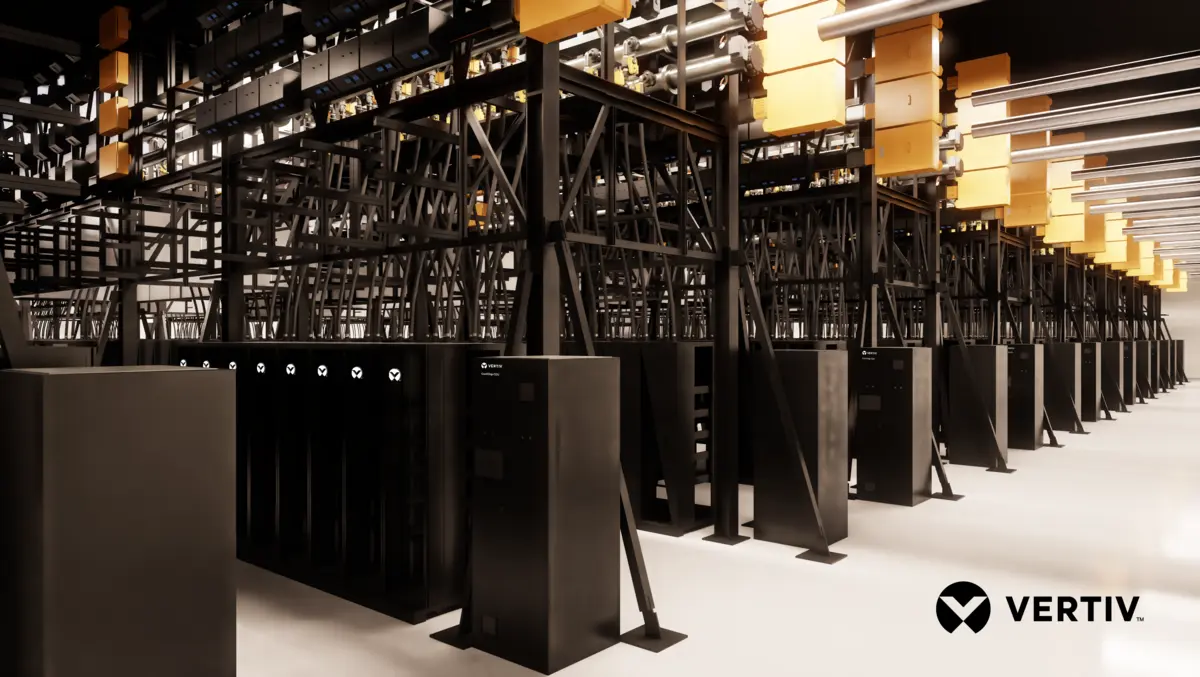

Vertiv has introduced a digital twin for its SmartRun infrastructure system in NVIDIA Omniverse DSX, marking the first phase of its AI factory digital twin roadmap.
The system targets data centre operators trying to match rapidly changing AI computing demands with the physical infrastructure for power, cooling and controls. Vertiv says the digital twin lets those elements be designed, simulated and validated together before construction begins.
The product is intended to move planning away from document-led processes and separate handoffs between engineering and deployment teams. Instead, it uses a model-based approach to capture system configurations and dependencies in a virtual environment.
This is designed to reduce later design changes and cut integration risk as AI deployments grow in density and scale. It also reflects a broader shift as operators look for ways to prepare facilities for successive generations of accelerated computing without redesigning infrastructure from scratch each time.
Vertiv is working with NVIDIA and Dassault Systèmes on the effort. The collaboration combines infrastructure design, simulation and model-based systems engineering, with the SmartRun digital twin linked to NVIDIA Omniverse DSX workflows and built on Dassault Systèmes' 3DEXPERIENCE platform.
According to Vertiv, the digital twin provides a shared digital model for configuration, simulation and validation across the infrastructure lifecycle, from early planning and deployment through commissioning, lifecycle assurance and later optimisation.
Design shift
The announcement comes as AI data centre projects grow larger and more complex, increasing pressure on operators to translate computing requirements into working physical sites more quickly. Power delivery, thermal management and operational controls are becoming more interdependent, particularly in facilities designed for high-density AI workloads.
Scott Armul, Chief Product and Technology Officer at Vertiv, said the old planning model was no longer sufficient for the pace of AI infrastructure development.
"AI infrastructure can no longer be planned one compute generation at a time," said Scott Armul, Chief Product and Technology Officer at Vertiv. "To deliver more tokens per second per megawatt, customers need power, cooling, controls and deployment workflows to be designed as one interdependent system. The Vertiv SmartRun digital twin helps encode Vertiv's infrastructure expertise into configurable, simulation-ready building blocks that support faster, more confident AI factory planning. As we extend this approach to Vertiv OneCore Rubin DSX, Vertiv is helping customers translate future compute requirements into deployable physical infrastructure before those requirements reach full deployment scale."
NVIDIA positioned the integration as part of a broader effort to create digital representations of AI factories at scale. Omniverse DSX is designed to let partners build and simulate digital twins using OpenUSD assets and power, thermal and operational simulations.
"AI factories require full-stack co-design across compute and physical infrastructure," said Vladimir Troy, Vice President of AI Infrastructure at NVIDIA. "NVIDIA Omniverse DSX Blueprint helps the ecosystem build, simulate and optimize gigawatt-scale AI factory digital twins using OpenUSD, SimReady assets, and power, thermal, and operational simulations. Bringing Vertiv SmartRun into this workflow can help customers evaluate infrastructure choices earlier and prepare for multiple generations of accelerated computing."
Partner roles
Dassault Systèmes said its role in the project centres on model-based systems engineering. The method is intended to replace fragmented design documents with a unified engineering model that preserves design logic and dependencies throughout a system's life.
For data centre developers, that could matter because infrastructure projects often involve multiple suppliers and specialist teams working across power systems, cooling layouts, controls, construction and commissioning. A shared digital model could reduce coordination problems as projects move from design to deployment.
Stéphane Sireau, Vice President of High Tech Industry at Dassault Systèmes, said the technology points to a wider industrial change in infrastructure engineering.
"Digital twins allow complex infrastructure systems to be represented with the intelligence of their configuration rules, dependencies, and engineering intent," said Stéphane Sireau, Vice President of High Tech Industry at Dassault Systèmes. "At Computex, Vertiv, Dassault and NVIDIA demonstrate how Vertiv's AI factory infrastructure is moving from document-based design workflows toward an industrialized, model-based systems engineering approach optimized for speed, quality, and system-level performance."
Vertiv said SmartRun is the first stage of a multi-phase roadmap for AI factory digital twins, aimed at linking infrastructure planning more closely with deployment and later operational changes as compute requirements continue to evolve.